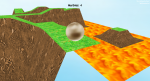
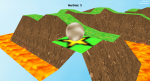
Ich habe leider gerade nicht so viel Zeit, daher eine kurze Antwort, sorry dafür

So aufgebaut:
17*17 floats (4 byte) für die Höhe der Heightmap
danach 16*16 folgende Daten:
- unsigned short (noch eine höhe, wissen selber nicht was)
- unsigned short (texture ID)
- unsigned int (entity, also spezielle map teile
danach 16*16 normal data (die wir aber nicht nutzen)
und danach noch ein word, welches den start "blickwinkel" angibt
danach noch der Levelname als string
hier der Original source fürs load map:
Code:
loadmap:

   filename$ = "data\map" + str$(curlevel) + cursubmap$ + ".dat"
   if file exist(filename$) = 0
     return
   endif

   `read in height data
   open to read 1, filename$
   for z=0 to 16
   for x=0 to 16
      read float 1, height#
      set matrix height 1, x, z, height#
   next x
   next z

   `read in and process tile data
   i=1
   for z=0 to 15
   for x=0 to 15
      read word 1, height
      read word 1, tilegfx
      set matrix tile 1, x, z, tilegfx
      `process entity
      read file 1, entity
      entities(x+1,z+1) = entity
      if entity = 0
         startx = x : startz = z
      endif
      if entity = 1
         goalx = x : goalz = z
      endif

      inc i
   next x
   next z

   `read in normal data
   for z=0 to 15
   for x=0 to 15
      read float 1, nx# : read float 1, ny# : read float 1, nz#
      if nz# > 0
         nx# = nx# * 0.05 : ny# = ny# * 0.05 : nz# = nz# * 0.05
      else
         nx# = nx# * 20.0 : ny# = ny# * 20.0 : nz# = nz# * 20.0
      endif

      set matrix normal 1, x, z, nx#, ny#, nz#
   next x
   next z

   update matrix 1

   `read in extra data
   read word 1, initangle
   read string 1, levelname$

   close file 1
Der Code ist in Dark Basic Pro und meiner Meinung nach eine richtig schlimme SPrache. Aber man kann es sich zurechtwurschteln.
Zur Textur ID:
string Texture[15] = { "Space", "Grass", "Earth", "Earth", "Earth", "Earth", "Earth", "Starfield", "Lava", "Grass", "Ice", "Water", "Metal", "MetalArrowDown", "MetalArrowUp" };
So das wars erstmal

Hoffe du kannst damit was anfangen,
LG