
Du verwendest einen veralteten Browser. Es ist möglich, dass diese oder andere Websites nicht korrekt angezeigt werden.
Du solltest ein Upgrade durchführen oder einen alternativen Browser verwenden.
Du solltest ein Upgrade durchführen oder einen alternativen Browser verwenden.
Der Linux Quatsch Thread
- Ersteller Tekkla
- Erstellt am

Gohma
Komplett-PC-Käufer(in)
Aber Ansprüche an Linux stellen... genau mein HumorDie gibt es ja nicht einmal auf MacOS, aber das ist ja auch ein Unix.


_Oskar_
Software-Overclocker(in)
Neues Futter und etwas zum Lachen  ^^ :
^^ :

 www.pcgameshardware.de
^^ :
CachyOS: Gaming-Distribution lässt Ubuntu und SUSE alt aussehen
CachyOS musste sich in Benchmarks auf Intel Panther Lake gegen Ubuntu 26.04 LTS und openSUSE Tumbleweed beweisen und hat das mit absoluter Bravour getan.
Unix? Was ist denn heute Unix und why the hell ist Mac OS Unix und Linux nicht?
Es hat nen Grund warum FreeBSD heute so heißt und nicht Unix.
Meiner Meinung nach gibt es Stand heute kein Unix.
Es sind unixoide Betriebssysteme, weils auf Deutsch irgendwie da wo herkommt und sonst nichts weiter.
No Original Unix out there
Es hat nen Grund warum FreeBSD heute so heißt und nicht Unix.
Meiner Meinung nach gibt es Stand heute kein Unix.
Es sind unixoide Betriebssysteme, weils auf Deutsch irgendwie da wo herkommt und sonst nichts weiter.
No Original Unix out there
Zuletzt bearbeitet:

joecnstr
Freizeitschrauber(in)
Hmmm es gibt noch ein paar wenig verbreitete "Unixe" wie AIX oder HP-UX und so?Unix? Was ist denn heute Unix und why the hell ist Mac OS Unix und Linux nicht?
Es hat nen Grund warum FreeBSD heute so heißt und nicht Unix.
Meiner Meinung nach gibt es Stand heute kein Unix.
Es sind unixoide Betriebssysteme, weils auf Deutsch irgendwie da wo herkommt und sonst nichts weiter.
No Original Unix out there
Ansonsten gäbe es da ja noch:
Eingebundener Inhalt
An dieser Stelle findest du externe Inhalte von Youtube. Zum Schutz deiner persönlichen Daten werden externe Einbindungen erst angezeigt, wenn du dies durch Klick auf "Alle externen Inhalte laden" bestätigst:
Ich bin damit einverstanden, dass mir externe Inhalte angezeigt werden. Damit werden personenbezogene Daten an Drittplattformen übermittelt.Für mehr Informationen besuche die Datenschutz-Seite.


Poulton
Volt-Modder(in)
Dann erklär doch mal, warum die Filmindustrie es seit Jahr und Tag schafft, Red Hat (und seine Clone Trooper) zu nutzen sowie offene Standards zu etablieren, während in dem von dir immer wieder angeführten Bereich jeder sein eigenes propritäres Süppchen mit der extra Prise Vendor Lock-in und Goldener Käfig kocht?Es fehlen wichtige Standardapplikationen im Bereich Foto-/Videobearbeitung (auch Support-Tools des Herstellers für Kamera) und im Studio-Bereich (auch Treiber für Studiogeräte oder Add-on VST bzw. VSTi).
Selbst im Video Bereich hat eine ganz bestimmte Linux Distro seine Verbreitung, nämlich Red Hat und seine Clone Trooper. Wird unter anderem seit Jahr und Tag genutzt von Weta Digital, DreamWorks und Disney.Nur dann bekommst Du genügend Qualität rein, um Hersteller von Applikationen dafür zu gewinnen, ihre Software darauf zu portieren.
Auch der Einsatz von Open Source ist, zumindest in der Branche, nichts ungewöhnliches und führte 2018 so weit, dass Academy Software Foundation (ASWF) gegründet wurde, als Kooperationsprojekt von der Linux Foundation und der "Academy of Motion Picture Arts and Sciences" (das sind die, die auch für die Oscar Auszeichnung zuständig sind) und wo im Grunde alle bekannten Studios und Produktionsfirmen mit drin vertreten sind. Es scheint auch mit für die Koordinieren der verschiedenen Open Source Projekte zuständig.

ASWF Landscape
 landscape.aswf.io
TE
TE

Tekkla
Volt-Modder(in)
Weil er halt nur ein simpler Anwender ohne Ahnung von "Profi" ist und einfach nur so tut, so wie es hier noch ein zwei andere Kandidaten mit fast gleichem Wortlaut immer wieder tun? Zufall? Agenda? Absprache? Es ist doch müßig immer und immer wieder auf diese geistig dünnen Ergüsse zu reagieren, oder nicht?Dann erklär doch mal, warum die Filmindustrie es seit Jahr und Tag schafft hat, auch Red Hat (und seine Clone Trooper) zu nutzen sowie offene Standards zu etablieren, während in dem von dir immer wieder angeführten Bereich jeder sein eigenes propritäres Süppchen mit der extra Prise Vendor Lock-in kocht?

Andreas1975
Volt-Modder(in)
Das ist Deine Meinung. Andere haben da eine andere Meinung.Meiner Meinung nach gibt es Stand heute kein Unix.
Zitat:
The Open Group is the certifying body for the UNIX trademark. In other words, it has to rubber-stamp your operating system as compliant to its standards before you can call it UNIX. UNIX in all uppercase letters is the badge of compliance.
So, the categories are as follows:
- Unix: A family of operating systems. This family includes both UNIX operating systems and Unix-like operating systems.
- UNIX operating systems: These have been certified as compliant to the standards.
- Unix-like operating systems: These look and operate like Unix, but haven't been certified as compliant.
There are two standards that certify UNIX: POSIX and Single UNIX Specification (SUS). SUS is a superset of POSIX. So, something can be POSIX compliant, but that doesn't make it UNIX. However, if something is SUS-compliant, it's a UNIX.
POSIX and the SUS form large collections of documents (around 3,700 pages). They define the operation and expected behavior of every aspect of a compliant UNIX system. Everything from asynchronous and synchronous I/O, to the scripting interface and user-level programs are cataloged and defined.
So, Is macOS UNIX?
The answer has to be yes.You can trace its lineage back through FreeBSD to BSD, and from there, back to the Unix distributed by Bell Labs before the license fee increase from AT&T.
But that doesn't matter.
If you write an operating system from scratch right now, as long as it satisfies the requirements of the SUS, it's considered UNIX. And it doesn't matter how you implement it. The XNU kernel at the heart of macOS is a hybrid architecture. It combines Apple's code with parts of the Mach and BSD kernels.
But that doesn't matter, either. What matters is it meets the requirements of the standards against which it's measured.
The BSD part of the XNU kernel provides the POSIX application programming interfaces (such as the various API and BSD system calls). Keeping that element of the BSD kernel intact within XNU is key to gaining certification as a UNIX. It allows XNU to speak compliant and compatible UNIX to the rest of the system.
macOS is a UNIX 03-compliant operating system certified by The Open Group. It has been since 2007, starting with MAC OS X 10.5. The only exception was Mac OS X 10.7 Lion, but compliance was regained with OS X 10.8 Mountain Lion.
Amusingly, just as GNU stands for "GNU's Not Unix," XNU stands for "X is Not Unix."

Is macOS UNIX? (and What Does That Mean?)
Is macOS Unix or UNIX? And what's POSIX and the SUS? We explain it all.
 www.howtogeek.com
Poulton
Volt-Modder(in)
Hier werden sie mit einem kompletten Ökosystem geholfen:Der Punkt ist, dass ein Betriebssystem gut konzipiert sein muss. Standardisierung ist erforderlich und am besten ein komplettes System aus einem Guss mit dem klassischen Umfang eines Unix-Systems plus Package Management.

Open Source Software Solutions for Enterprise Servers &...
Modernize your infrastructure with SUSE Linux Enterprise servers, cloud technology for IaaS, and SUSE's software-defined...

The world's open source leader
Red Hat is the world’s leading provider of open source solutions, using a community-powered approach to provide reliable and high-performing cloud, virtualization, storage, Linux, and middleware technologies. Red Hat also offers award-winning support, training, and consulting services. Red Hat...
Der vielbeschworene "Pro-User" ist also in Wirklichkeit nur ein Pro darin gemolken zu werden und sich dabei noch toll vorzukommen? Hätte uns doch nur mal jemand gewarnt!Weil er halt nur ein simpler Anwender ohne Ahnung von "Profi" ist und einfach nur so tut
Zuletzt bearbeitet:
Gö echt jetzt, ich habe Meinungen die andere nicht haben?Das ist Deine Meinung. Andere haben da eine andere Meinung.
....<so much text......>
Bitte, erzähl mir was Neues!
Tatsächlich scheint MacOS Teile des original Quellcodes zu enthalten, wohingegen Linux nie den teuren Zertifikationsprozess durchlaufen hat.
Linux ist technisch aber sehr unix (alles ist eine Datei, Quellcode frei...) bzw wird oft unixuider wahrgenommen als andere, bzw ist POSIX konform....
Ich seh halt damals schon: BSD, FreeBSD bzw AT&T Unix, System V und naja irgendwie alles Unix oder halt auch alles NICHT Unix.
Im Grunde ist es mir aber eh egal. Ist halt Macos Unix und Linux halt nicht

Zuletzt bearbeitet:

Fun Fact: Das gab es wirklich:Ansonsten gäbe es da ja noch:
https://movies.stackexchange.com/qu...erating-system-featured-in-jurassic-park-real
joecnstr
Freizeitschrauber(in)
Was, das war echt?!Fun Fact: Das gab es wirklich:
https://movies.stackexchange.com/qu...erating-system-featured-in-jurassic-park-real
 dann will ich den File Browser jetzt auch
Andreas1975
Volt-Modder(in)
Da verwundert Dein Verhalten besonders. Kann natürlich verstehen wenn man darauf aufmerksam gemacht wird das man falsch liegt durchaus verschnupft reagiert. Aber wenn es um Richtig/Falsch geht was wirklich interessiert widerspricht das eigene Verhalten der eigenen Aussage.Nur zur Info
Richtig/Falsch ist halt das, was (mich) wirklich interessiert.
Aus dem Kommentar Bereich: "People knew Windows, but UNIX was way outside the mainstream."Fun Fact: Das gab es wirklich:
Sie machen da aber deutlich mehr draus!Da verwundert Dein Verhalten besonders. Kann natürlich verstehen wenn man darauf aufmerksam gemacht wird das man falsch liegt durchaus verschnupft reagiert. Aber wenn es um Richtig/Falsch geht was wirklich interessiert widerspricht das eigene Verhalten der eigenen Aussage.
Ich hab ja sogar selbst dann zugestimmt bzw genannt dass macos den offiziellen, teuren Zertifizierungsprozess durchlaufen hat. Ich meine aber auch, dass es so einfach nicht ist.
Habe dann erwähnt, quasi meinetwegen ist macos Unix und Linux halt nicht.
Also was ist jetzt das Problem?
(Vorerst) Meinungen haben viele Leute in viele Richtungen und selten ist es die alleinige, rechtmäßige Wahrheit.
Daher diskutiert man ja... Wichtiger was man daraus macht, welche Schlüsse man zieht, meinen Sie nicht auch?
Ich glaube, Sie haben gerade den Eindruck, dass ich verschnupt und unentspannt bin, aber so ist es nicht
 Alles gut
Zuletzt bearbeitet:
Gibt noch diesen Klon: https://fsv.sourceforge.net/Was, das war echt?!
Habe ihn aber jetzt nach einigen Versuchem nicht kompiliert bekommen. Ist halt 25 Jahre alter Code.
Poulton
Volt-Modder(in)
SGI. Da ist mit Sicherheit das Common Desktop Enviroment (CDE) im Einsatz. Ein echter Klassiker.Fun Fact: Das gab es wirklich:
https://movies.stackexchange.com/qu...erating-system-featured-in-jurassic-park-real
Andreas1975
Volt-Modder(in)
Werde ich mir mal ansehen.
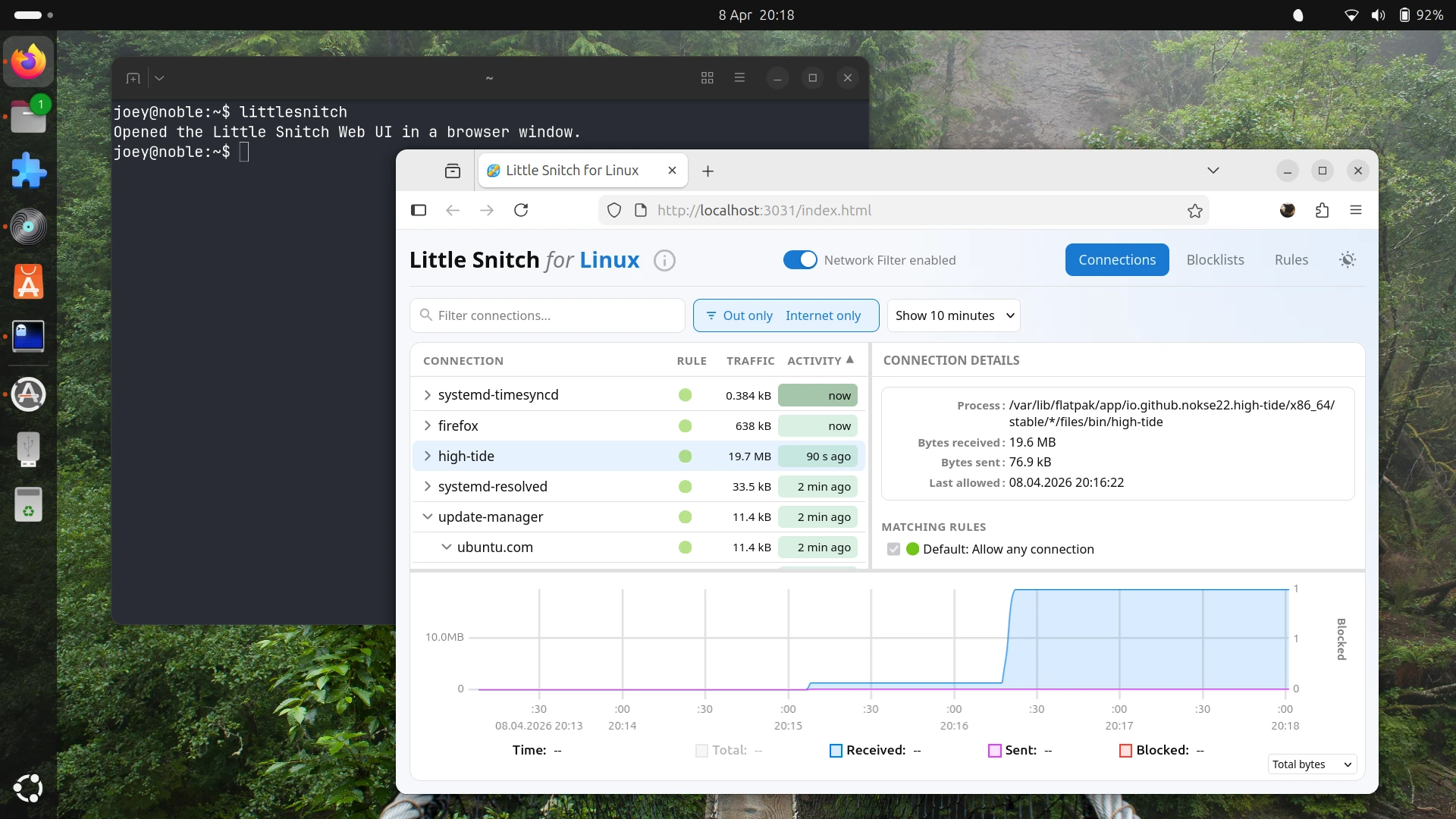
 www.omgubuntu.co.uk
Little Snitch for Linux: Monitor & Block App Network Connections
Little Snitch is now on Linux. See which apps are making network connections, block unwanted ones and find out how chatty your system really is.
www.omgubuntu.co.uk
Poulton
Volt-Modder(in)
Hab ich von heute auch was: Aufgeregter Mitarbeiter dessen Laptop mit einmal ausging. Ende vom Lied war etwas, was ich die letzten Jahre schon mehrmals hatte: Staub oder Oxidation an den Kontakten bzw. Stecker vom Akku zum Mainboard. Den gereinigt und es ging wieder mit Akku, ohne Akku lief er ja ohne Probleme.Nicht direkt Linux,
Bis jetzt schon bei Lenovo, HP und Dell gehabt und das nicht in Form von irgendwelchen Consumer Möhren.
Zuletzt bearbeitet:
_Oskar_
Software-Overclocker(in)
Werde ich mir mal ansehen.
Little Snitch for Linux: Monitor & Block App Network Connections
Little Snitch is now on Linux. See which apps are making network connections, block unwanted ones and find out how chatty your system really is.
Zuerst sollte man alle nicht Benötigten Dienste im Sys Deaktivieren, unter systemd im Terminal als root mit:
systemctl stop --now Dienstname
systemctl disable --now Dienstname
systemctl mask --now Dienstname
Und mit dem Befehl: systemctl status Dienstname überpfrüft man ob der jeweilige Dienst auch wirklich aus ist bzw. dead.
Zuletzt bearbeitet:
Das Problem ist, es ist noch gar nicht so lange her, da war schreiben/lesen auf ntfs Laufwerke noch problembehaftet.
oida so ein schachsinn.
ich hatte mal testhalber das ntfs3 modul im kernel getestet. das hat mir ntfs fehler erzeugt. wers genauer wissen will, suche nach dem user, ich habe es mehrfach dokumentiert. mit log dateien und details.
ABER
fuse + ntfs-3g hat nie probleme gemacht
und das wird sicherlich seit 2006 in verwendung sein
ich schiebe sehr oft von der kc3000 2tb mit w11 pro ganze spieleordner auf meine ramsch hdd mit lvm2 und btrfs. vorher war ext4 drauf.
meine ganzen windows updates werden entweder auf das smartphone heruntergeladen oder auf den laptop und dann mittels usb und gentoo linux dann auf w11 pro verschoben mit ntfs
da würde ich sofort sehen wenn es probleme gibt. und sah ich auch als ich mal das kernel ntfs3 modul getest habe. das kernel modul ist schrott. ntfs-3g funktioniert tadellos
ntfsfix hat den einzigen mangel dass es kein fsck ist. das sollte im fsck drin sein, ist es aber nicht.
w11pro mag oder braucht doch mehrfach in 2025 ein ntfsfix. thema fehlerhafte windows updates die von microslop ausgeliefert werden.
--
ich hatte 2006 gentoo und arch installiert. arch ist nach 1 oder 2 jahren von der platte geflogen. von der gentoo installation schreibe ich aber gerade. gibt es noch ein windows vista? frage nur so. schade drum im nachhinein vista nur 3 tage verwendet zu haben um iso dateien zur installation herunterzuladen.
Ähnliche Themen

- Antworten
- 25
- Aufrufe
- 1K


- Antworten
- 13
- Aufrufe
- 1K
- Antworten
- 14
- Aufrufe
- 942
- Antworten
- 0
- Aufrufe
- 651
- Antworten
- 11
- Aufrufe
- 978
