

Pro_PainKiller
Software-Overclocker(in)
AW: Metro: Exodus im Hands-On-Test - Spiel- und Performance-Eindrücke von der Gamescom inklusive Raytracing
Durch jahrelange intensive Forschung an OptiX™ Ray Tracing Engine seitens Nvidia und durch die gute enge Zusammenarbeit mit allen namhaften Partnern und API Support für Microsoft DXR & Vulkan, ist man heute schon in der Lage, durch die komplett neue Turing GPU Architektur mit optimierter (SM) und neuer Tensor AI & RT Cores diese neue Hybrid 'RTX' RayTracing Technologie bereits 2018 auf den Markt zu bringen. Die Nvidia 'RTX' Turing GPU's, verfügen über eine neue Streaming-Multiprozessor (SM)-Architektur, die eine Integer-Ausführungseinheit und eine neue Unified-Cache-Architektur (L1/L2 Cache) mit doppelter Bandbreite gegenüber der vorherigen Generation.
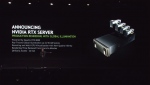
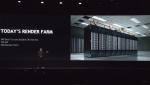
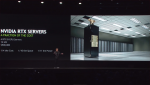
Der komplette professionelle Grafikmarkt mit allen Industriegrössen für Digital Content Creation 'DCC' & Independent Software Vendor (ISV) für Movie Rendering, Cutting, Compositing, Visualeffects, CAD Architektur & Maschinenbau wird mit Handkuss auf diesen neue Nvidia RTX Technologie umschwenken, da man erstmals Realtime GPU Raytracing in GPU CloudComputing Farmen zeitsparend einsetzten kann.
Schritt 1 ist der Professional 'Quadro RTX' & Game-Entwickler Markt .... und Schritt 2 ist dann der HighEnd Gaming Markt 'Geforce RTX'
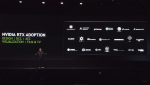
World’s Top Graphics Software Companies Adopting NVIDIA RTX Capabilities
The leading software providers representing many of the most important applications for designing the products we use, the cars we drive, the movies we watch and even for scientists to visualize the world around us are jumping on Turing, NVIDIA’s newly launched GPU architecture.
These new capabilities are combined with increases in the speed and fidelity of drawing raster graphics through newly advanced shaders. And up to 4,608 CUDA cores for parallel compute processing means that software developers have a hardware platform unlike anything before.
And, perhaps unsurprisingly, application developers are jumping at the chance to bring to their customers amazing new capabilities and up to 30x speed increases vs. CPU only for rendering.
Adobe Dimension CC: Intuitive new 3D creative tool built for all aspects of design and marketing is supporting NVIDIA MDL and demonstrating at SIGGRAPH, for the first time, a preview of a Dimension renderer for NVIDIA RTX ray tracing and Turing GPUs.
Allegorithmic Project Alchemist: New Substance tool, integrating AI-powered feature with over 100x speedup when running on NVIDIA Turing GPUs compared with CPUs. Has been presented at Substance Days at SIGGRAPH this morning, and will be shown in the Allegorithmic booth.
Allegorithmic Substance Designer: Worldwide reference material editor, integrating RTX through DXR for light baking. RTX gives a speed increase of 800 percent compared with previous CPU-based technology.
Altair Thea Render: New SketchUp and Cinema 4D plugins, along with the upcoming Rhino plugin release, will help a broad range of markets get a ray-tracing performance boost by one order of magnitude using NVIDIA OptiX denoiser technology.
ANSYS Optis VRXPERIENCE and Speos: Simulation software leveraging NVIDIA OptiX for faster convergence and high framerate deterministic ray-traced simulation for complex optical system, with 30x speedup compared with CPU legacy technology.
Autodesk Arnold: The Arnold GPU, which is currently in beta, is one of the first production renderers to utilize NVIDIA OptiX. At SIGGRAPH this week, we’re previewing it running on our latest Turing GPU hardware, featuring ray-tracing hardware designed specifically for OptiX.
Blackmagic DaVinci Resolve: World’s most popular color-grading application, using Turing Tensor Cores in Resolve 15 to accelerate AI inferencing for graphics enhancement.
Blender Cycles: Open source renderer using NVIDIA CUDA to accelerate performance.
Cebas finalRender: GPU-accelerated ray tracer for Autodesk 3ds Max uses NVIDIA OptiX AI denoiser for 5x+ acceleration.
Chaos Group: Preview of Project Lavina using Microsoft’s DXR to deliver 3-5x real-time ray-tracing performance over Volta generation for scenes exported from Autodesk 3ds Max and Maya. VRAY GPU using RT Cores in Quadro RTX for substantial acceleration over NVIDIA Pascal generation.
Dassault Systèmes 3DEXPERIENCE CATIA: The industry reference Design and Engineering Solution plans to leverage RTX for rendering with life-like quality materials to accelerate VR rendering for immersive experiences and design validation.
Dassault Systèmes HomebyMe: Web portal for interior design that leverages OptiX denoiser to boost render times by 10x.
Dassault Systèmes SOLIDWORKS Visualize: Visualization tool for 3D CAD data using OptiX denoiser for instant life-like rendering.
EA SEED: Cross-disciplinary team within EA Worldwide Studios whose Project PICA PICA is a real-time ray-tracing experiment featuring a mini-game for self-learning AI agents in a procedurally assembled world. The approaches inspire developers and provide a glimpse of a future where real-time ray tracing powers the creative experiences of tomorrow.
Epic Games’ Unreal Engine: Complete suite of tools for the creation of games, visualizations, interactive product designs, movies, broadcast entertainment and immersive experiences. Unreal Engine is using NVIDIA RTX technology through DXR to achieve industry-leading real-time ray-tracing performance.
ESI Group IC.IDO: Immersive VR solution for engineering virtual prototyping, using Quadro RTX accelerated NVIDIA OptiX, potentially supporting real-time ray tracing on Turing GPUs, planned for future IC.IDO version.
ESRI ArcGIS Pro: World’s leading GIS application is harnessing the power of deep learning for both training and inferencing, leveraging NVIDIA Turing Tensor Cores in the upcoming release of ArcGIS Pro.
Isotropix Clarisse: Physically based rendering engine demonstrating OptiX ray-tracing acceleration on Quadro RTX 6000, showing a 20x viewport performance improvement over CPUs.
Kitware ParaView: Popular scientific visualization tool, ParaView has been enhanced with a completely new rendering backend using NVIDIA RTX technology. It provides enhanced visual cues to better communicate the content of the scientific datasets while maintaining the speed for data exploration. The NVIDIA RTX backend for ParaView will be shown live at SIGGRAPH.
Otoy OctaneRender: GPU-accelerated, unbiased, physically correct renderer is demonstrating performance improvements of 5-8x with Octane 2019’s path-tracing kernel — running at 3.2 billion rays/second on NVIDIA Quadro RTX 6000, compared with 400 million rays/second on Quadro P6000.
Pixar Renderman: Leading film renderer is announcing support for OptiX AI denoiser in R22.1 due later this year. Demonstrating RenderMan XPU architecture that uses CPU and GPU with NVIDIA OptiX.
PocketStudio: New tool that will be shown for first time at SIGGRAPH during Real-Time Live. It allows 3D filmmakers to easily create, play and stream 3D animation sequences using real-time collaborative editing. It leverages Vulkan real-time ray tracing for its advanced quality viewport.
Redshift 3.0: Leading biased GPU renderer is announcing that Redshift 3.0 will use OptiX to access RTX ray-tracing acceleration. Redshift 2.6 shipping with OptiX denoising, accelerating interactivity.
Remedy Entertainment: Creators of cinematic blockbuster action games that break media boundaries and push the envelope of 3D character technology and visual effects. Remedy has been researching how to utilize NVIDIA RTX ray-tracing technology and the DXR API in its Northlight engine.
Siemens NX: Leading CAD application supporting GPU-based rendering with Ray Traced Studio, to include AI denoising and MDL support.
University of Illinois VMD: A molecular visualization tool developed at University of Illinois and used by over 100,000 researchers all over the world demonstrating support for NVIDIA OptiX and Quadro RTX GPUs.
Weta Digital: Leading visual effects house showing their Gazebo virtual production tool with OptiX acceleration, enabling studio artists to see exactly what final-frame production renders will look like, reducing guesswork and allowing convergence to a desired look more quickly.
Faster 8K Editing with NVIDIA Quadro RTX and Turing Architecture | cinema5D
Nvidia presented some big news: their newly developed GPU architecture called Turing and new NVIDIA Quadro RTX graphic cards, which are the first GPUs based on the Turing architecture. These new cards aim to ease 8K workflows and Nvidia worked closely with RED to optimize and test the results with the REDCODE RAW file format. The new Quadro RTX GPUs should allow editing 8K footage in full resolution, in real time.
Durch jahrelange intensive Forschung an OptiX™ Ray Tracing Engine seitens Nvidia und durch die gute enge Zusammenarbeit mit allen namhaften Partnern und API Support für Microsoft DXR & Vulkan, ist man heute schon in der Lage, durch die komplett neue Turing GPU Architektur mit optimierter (SM) und neuer Tensor AI & RT Cores diese neue Hybrid 'RTX' RayTracing Technologie bereits 2018 auf den Markt zu bringen. Die Nvidia 'RTX' Turing GPU's, verfügen über eine neue Streaming-Multiprozessor (SM)-Architektur, die eine Integer-Ausführungseinheit und eine neue Unified-Cache-Architektur (L1/L2 Cache) mit doppelter Bandbreite gegenüber der vorherigen Generation.
Der komplette professionelle Grafikmarkt mit allen Industriegrössen für Digital Content Creation 'DCC' & Independent Software Vendor (ISV) für Movie Rendering, Cutting, Compositing, Visualeffects, CAD Architektur & Maschinenbau wird mit Handkuss auf diesen neue Nvidia RTX Technologie umschwenken, da man erstmals Realtime GPU Raytracing in GPU CloudComputing Farmen zeitsparend einsetzten kann.
Schritt 1 ist der Professional 'Quadro RTX' & Game-Entwickler Markt .... und Schritt 2 ist dann der HighEnd Gaming Markt 'Geforce RTX'
World’s Top Graphics Software Companies Adopting NVIDIA RTX Capabilities
The leading software providers representing many of the most important applications for designing the products we use, the cars we drive, the movies we watch and even for scientists to visualize the world around us are jumping on Turing, NVIDIA’s newly launched GPU architecture.
These new capabilities are combined with increases in the speed and fidelity of drawing raster graphics through newly advanced shaders. And up to 4,608 CUDA cores for parallel compute processing means that software developers have a hardware platform unlike anything before.
And, perhaps unsurprisingly, application developers are jumping at the chance to bring to their customers amazing new capabilities and up to 30x speed increases vs. CPU only for rendering.
Adobe Dimension CC: Intuitive new 3D creative tool built for all aspects of design and marketing is supporting NVIDIA MDL and demonstrating at SIGGRAPH, for the first time, a preview of a Dimension renderer for NVIDIA RTX ray tracing and Turing GPUs.
Allegorithmic Project Alchemist: New Substance tool, integrating AI-powered feature with over 100x speedup when running on NVIDIA Turing GPUs compared with CPUs. Has been presented at Substance Days at SIGGRAPH this morning, and will be shown in the Allegorithmic booth.
Allegorithmic Substance Designer: Worldwide reference material editor, integrating RTX through DXR for light baking. RTX gives a speed increase of 800 percent compared with previous CPU-based technology.
Altair Thea Render: New SketchUp and Cinema 4D plugins, along with the upcoming Rhino plugin release, will help a broad range of markets get a ray-tracing performance boost by one order of magnitude using NVIDIA OptiX denoiser technology.
ANSYS Optis VRXPERIENCE and Speos: Simulation software leveraging NVIDIA OptiX for faster convergence and high framerate deterministic ray-traced simulation for complex optical system, with 30x speedup compared with CPU legacy technology.
Autodesk Arnold: The Arnold GPU, which is currently in beta, is one of the first production renderers to utilize NVIDIA OptiX. At SIGGRAPH this week, we’re previewing it running on our latest Turing GPU hardware, featuring ray-tracing hardware designed specifically for OptiX.
Blackmagic DaVinci Resolve: World’s most popular color-grading application, using Turing Tensor Cores in Resolve 15 to accelerate AI inferencing for graphics enhancement.
Blender Cycles: Open source renderer using NVIDIA CUDA to accelerate performance.
Cebas finalRender: GPU-accelerated ray tracer for Autodesk 3ds Max uses NVIDIA OptiX AI denoiser for 5x+ acceleration.
Chaos Group: Preview of Project Lavina using Microsoft’s DXR to deliver 3-5x real-time ray-tracing performance over Volta generation for scenes exported from Autodesk 3ds Max and Maya. VRAY GPU using RT Cores in Quadro RTX for substantial acceleration over NVIDIA Pascal generation.
Dassault Systèmes 3DEXPERIENCE CATIA: The industry reference Design and Engineering Solution plans to leverage RTX for rendering with life-like quality materials to accelerate VR rendering for immersive experiences and design validation.
Dassault Systèmes HomebyMe: Web portal for interior design that leverages OptiX denoiser to boost render times by 10x.
Dassault Systèmes SOLIDWORKS Visualize: Visualization tool for 3D CAD data using OptiX denoiser for instant life-like rendering.
EA SEED: Cross-disciplinary team within EA Worldwide Studios whose Project PICA PICA is a real-time ray-tracing experiment featuring a mini-game for self-learning AI agents in a procedurally assembled world. The approaches inspire developers and provide a glimpse of a future where real-time ray tracing powers the creative experiences of tomorrow.
Epic Games’ Unreal Engine: Complete suite of tools for the creation of games, visualizations, interactive product designs, movies, broadcast entertainment and immersive experiences. Unreal Engine is using NVIDIA RTX technology through DXR to achieve industry-leading real-time ray-tracing performance.
ESI Group IC.IDO: Immersive VR solution for engineering virtual prototyping, using Quadro RTX accelerated NVIDIA OptiX, potentially supporting real-time ray tracing on Turing GPUs, planned for future IC.IDO version.
ESRI ArcGIS Pro: World’s leading GIS application is harnessing the power of deep learning for both training and inferencing, leveraging NVIDIA Turing Tensor Cores in the upcoming release of ArcGIS Pro.
Isotropix Clarisse: Physically based rendering engine demonstrating OptiX ray-tracing acceleration on Quadro RTX 6000, showing a 20x viewport performance improvement over CPUs.
Kitware ParaView: Popular scientific visualization tool, ParaView has been enhanced with a completely new rendering backend using NVIDIA RTX technology. It provides enhanced visual cues to better communicate the content of the scientific datasets while maintaining the speed for data exploration. The NVIDIA RTX backend for ParaView will be shown live at SIGGRAPH.
Otoy OctaneRender: GPU-accelerated, unbiased, physically correct renderer is demonstrating performance improvements of 5-8x with Octane 2019’s path-tracing kernel — running at 3.2 billion rays/second on NVIDIA Quadro RTX 6000, compared with 400 million rays/second on Quadro P6000.
Pixar Renderman: Leading film renderer is announcing support for OptiX AI denoiser in R22.1 due later this year. Demonstrating RenderMan XPU architecture that uses CPU and GPU with NVIDIA OptiX.
PocketStudio: New tool that will be shown for first time at SIGGRAPH during Real-Time Live. It allows 3D filmmakers to easily create, play and stream 3D animation sequences using real-time collaborative editing. It leverages Vulkan real-time ray tracing for its advanced quality viewport.
Redshift 3.0: Leading biased GPU renderer is announcing that Redshift 3.0 will use OptiX to access RTX ray-tracing acceleration. Redshift 2.6 shipping with OptiX denoising, accelerating interactivity.
Remedy Entertainment: Creators of cinematic blockbuster action games that break media boundaries and push the envelope of 3D character technology and visual effects. Remedy has been researching how to utilize NVIDIA RTX ray-tracing technology and the DXR API in its Northlight engine.
Siemens NX: Leading CAD application supporting GPU-based rendering with Ray Traced Studio, to include AI denoising and MDL support.
University of Illinois VMD: A molecular visualization tool developed at University of Illinois and used by over 100,000 researchers all over the world demonstrating support for NVIDIA OptiX and Quadro RTX GPUs.
Weta Digital: Leading visual effects house showing their Gazebo virtual production tool with OptiX acceleration, enabling studio artists to see exactly what final-frame production renders will look like, reducing guesswork and allowing convergence to a desired look more quickly.
Faster 8K Editing with NVIDIA Quadro RTX and Turing Architecture | cinema5D
Nvidia presented some big news: their newly developed GPU architecture called Turing and new NVIDIA Quadro RTX graphic cards, which are the first GPUs based on the Turing architecture. These new cards aim to ease 8K workflows and Nvidia worked closely with RED to optimize and test the results with the REDCODE RAW file format. The new Quadro RTX GPUs should allow editing 8K footage in full resolution, in real time.
Anhänge

Zuletzt bearbeitet:


